How to evaluate a design agency's portfolio before you hire them
A strong portfolio proves process, not just polish. Here is what to check before hiring a startup design agency, from case studies to references.
Look past the visuals: check whether each case study explains the problem, the process, and the result, not just the final screens. Read one project in depth instead of skimming ten. Ask what the agency's role actually was, whether they pushed back on the founder, and what happened to the metric after launch. A portfolio that only shows pretty screens is a portfolio that's hiding something.
Start with the questions the portfolio should answer
Most founders open a portfolio and scroll for a feeling. That's backward. A portfolio is evidence, and evidence should answer specific questions: what was broken before this project started, what decisions did the designer make and why, and what changed after it shipped. If a case study skips straight from "here's the old design" to "here's the new design" with no explanation in between, you're looking at a gallery, not a track record.
This matters more at the startup stage than almost any other, because you're not hiring someone to make things look nice. You're hiring someone to make product decisions with real consequences: what to build first, what to cut, what the user sees in their first ten seconds. A portfolio should give you a read on how that person thinks, not just how they render a button.
It also matters because at pre-seed and seed stage, the founder usually can't afford a bad hire twice. A wasted month on the wrong design partner is a wasted month of runway, and the fix isn't a longer brief, it's a better filter up front.
Read one case study slowly instead of skimming ten
Pick the project closest to your own situation, stage, product type, or problem, and spend real time on it. Look for three things: the context (what the business needed and why), the reasoning (why they made the calls they made), and the outcome (what actually happened, ideally with a number attached).
If none of the case studies have all three, that's worth noting. A studio that only shows outcomes without context is asking you to trust the result without understanding the work. A studio that only shows process without outcomes might be great at workshops and weak at shipping.
Weigh process over polish
Final screens are the easiest part of a portfolio to fake or cherry-pick. Process is harder to fake. Ask directly: how do they run discovery, how do they handle a round of feedback that contradicts their instinct, and what does handoff to engineering actually look like.
The honest answer from any good partner should include moments where they disagreed with a client and said so. If every case study reads like a smooth, conflict-free success story, ask what got left out.
Check what happened after the redesign shipped
A portfolio full of screenshots and zero numbers is telling you something. It doesn't need to be a wall of metrics, startups at this stage don't always have clean data, but there should be some signal: a funding round that followed, a client who came back for more work, a partnership the new site helped land.
Artone's own case studies lean on this. Open's site work coincided with a $1.52M raise and onboarding MoneyGram, Mollie, and Viva.com. Entangle's redesigned site helped it win FixBIOME, KX Pilates, Dr Siegal's Cookie Diet, and EO as clients. Those aren't claims that design alone caused those outcomes, but they're the kind of context-plus-result pairing a strong case study should have. If an agency can't point to anything like that anywhere in their portfolio, ask why.
Ask for references, and ask them the right questions
Most founders ask references "were they good to work with." That question gets a polite yes almost every time. Better questions: did they push back when the founder's instinct was wrong, did the relationship get easier or harder as the project went on, and would they hire this person again for something more ambiguous than a landing page.
That last one matters. Plenty of designers execute a clear brief well. Fewer are useful when the brief itself is unclear, which is most of the time at pre-seed and seed stage.
A short reference call is enough to surface most of this. Ask what the studio was like in week one versus week eight, whether scope crept and who managed it, and whether the founder felt like a client or a partner in the decisions. The answer to that last question tends to separate a design vendor from someone who actually thought about the product.
Watch for these red flags
A few patterns are worth flagging before you sign anything. Case studies that only show the discovery phase and skip delivery, which usually means development handoff was rough. Heavy reliance on the same industry template across projects, which can look like expertise but is often just repetition. An unwillingness to name a project that didn't go well, since every studio that's been around long enough has one. And vague talk about "results" with no specifics attached, no client name, no number, no timeframe, just adjectives.
None of these are automatic disqualifiers. They're prompts to ask a direct follow-up question and see how the studio answers it. A studio with nothing to hide usually answers a pointed question faster than one that's used to being asked politely and left alone.
Weigh credibility signals alongside case studies
Case studies tell you what a studio did. Credibility signals tell you whether anyone independent has vouched for the work. Look for a few things beyond the portfolio itself: recognition from platforms the design community actually respects (Awwwards, Framer, Contra, Landbook, and similar), whether the studio's clients are themselves backed by investors with a reputation for diligence, and whether any of the work has been part of a larger campaign that won recognition on its own, not just a self-submitted award.
Artone's own version of this: featured on Awwwards, Framer, Contra, Landbook, and Orpetron, an Official Framer Expert, and work that contributed to a Grand Effie-winning campaign. Client-side, the backing includes Y Combinator, Global Brain, Pioneer Fund, and imec.istart, alongside enterprise names like Samsung, Lenovo, and Logitech. None of that replaces reading the actual case studies, but it's a reasonable secondary filter when two portfolios look similar on the surface.
What a strong startup-design portfolio actually looks like
The studios worth hiring tend to show range across problem types, not just polish across screens: a brand identity built in under a week for an investor deadline, a one-month UI sprint, a full product redesign spread across two engagement phases. Artone's own portfolio spans exactly that kind of range, backed by clients across AI, B2B SaaS, and fintech, with two out of three coming back for more work.
If you're mid-evaluation and want a second pair of eyes on a shortlist, that's a fifteen-minute conversation, not a sales pitch: book an intro call and walk through what you're looking at.
Before you sign
Once you've read the case studies, checked references, and asked the harder questions, the next step is usually a scoped first project rather than a long commitment. Compare that against the alternative of hiring in-house versus staying with an agency, since portfolio quality only tells you whether someone can do the work, not whether the working relationship will hold up over months. Once you've picked a partner, how you brief them will do more for the outcome than almost anything else.
A good portfolio review takes an hour, not a week. Read slowly, ask about process, check for a real outcome, and talk to at least one reference who isn't a hand-picked cheerleader. If you'd rather skip the back-and-forth and just talk through your shortlist, book a call.
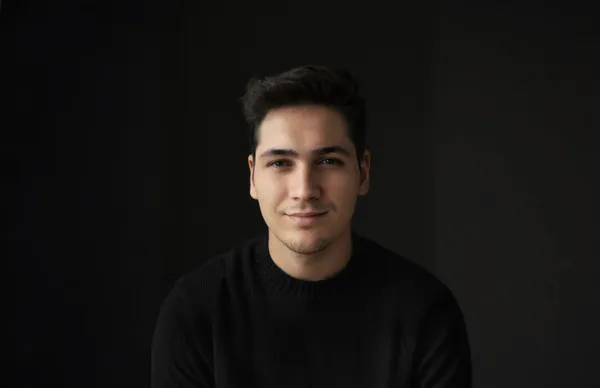
Hey, I'm Razvan, founder of
Artone Studio.
I’ve spent the last 9+ years helping startups, from zero to funded, turn ideas into products investors notice and users love.
At Artone, we design with purpose. We care about how things look, but even more about how they work. If you’re building something ambitious and want a design partner who gets it, let’s talk.