Onboarding is more important than your entire product.
A great product can still fail if onboarding is unclear, here’s how to fix that.
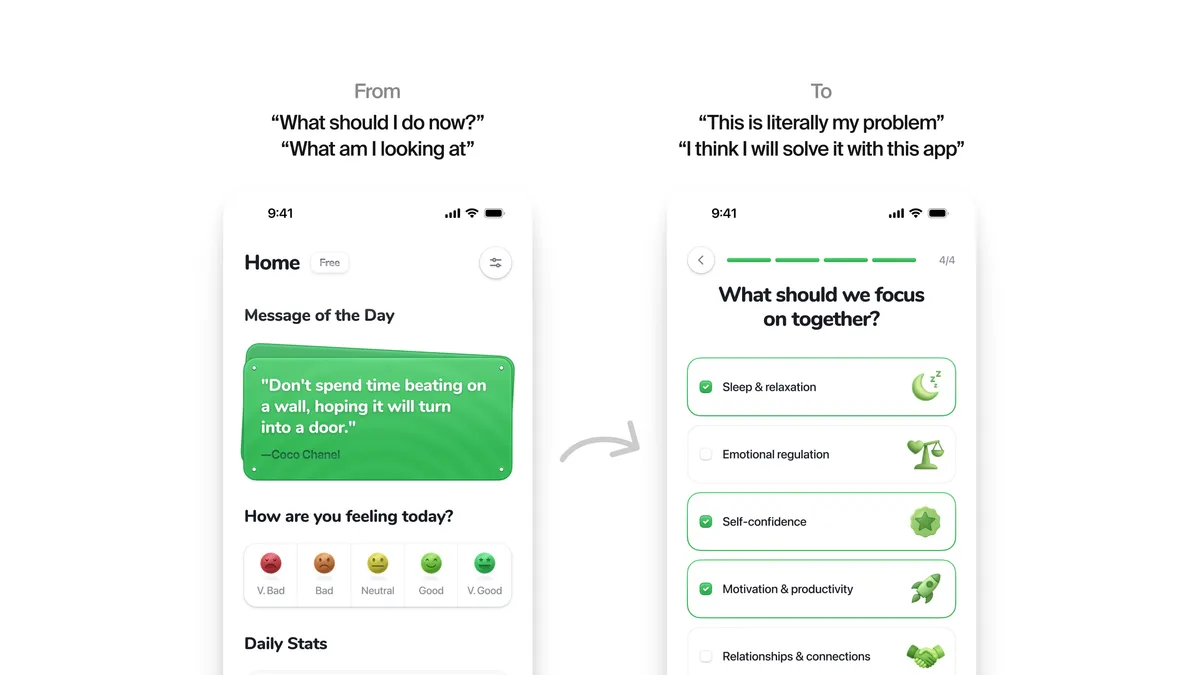
*HOT TAKE ALERT*: onboarding matters more than your roadmap.
Because if users do not make it past the first minute, everything you built after that is basically irrelevant. They signed up excited, they open the app, they feel lost, they leave. Then they find a competitor who took 30 seconds to explain what the thing does and how to get value from it.
That is the real fight.
Not feature vs feature. Not UI polish vs UI polish.
It is clarity vs confusion. And onboarding is where most products lose.
The moment that decides your retention
A lot of founders treat onboarding like a nice-to-have. Something you add later when you have time.
But onboarding is not decoration. It is the first experience of your UX. It is the first proof that your product actually solves something. It is the first time you build trust.
Especially in mobile apps, where attention span is brutal. But web apps are not immune either. The pattern is the same:
- user lands inside
- user looks around
- user does not understand what to do next
- user closes it and never returns
People love saying “they will explore”.
They will not. Not in 2026. Not with 20 alternatives a click away.
You have two minutes to answer four questions
Good onboarding does one job: it gets the user to their first meaningful action.
Not “finished setup”. Not “completed tutorial”.
The first moment where they think: ok, this is useful.
In practical terms, your onboarding needs to answer four questions fast:
- What does this product do?
- What should I do first?
- How do I navigate it without thinking?
- What problem is it solving for me specifically?
If any of those are unclear, the user is guessing.
And if they are guessing, they are about to churn.
Blank dashboards kill good products
One of the most common onboarding mistakes is dumping people into an empty dashboard.
From the founder side, it feels clean. It feels “minimal”. It feels like you are not getting in the user’s way.
From the user side, it feels like walking into a cockpit with no labels.
They do not know what matters. They do not know what the product expects from them. They do not know what success looks like.
So they bounce.
This is why you can have a genuinely great product and still struggle with activation and retention. Your product can be good, but your onboarding UX makes it impossible to discover.
Onboarding is not a tutorial, it is a guided first win
The best onboarding experiences do not “teach” the product. They guide the user into value.
That usually looks like:
- context first, why this exists and what it helps with
- a clear first action, not ten options
- examples, so the user is never staring at emptiness
- momentum, so the user feels progress immediately
Even a demo workspace or a sample project can do wonders.
Not because it is fancy, but because it removes the scary part of starting from zero.
The goal is simple: make the user feel like they are using the product, not learning about it.
The underrated part: personalization
Here’s the part most teams miss.
The best onboarding asks the right questions.
Not just for analytics or segmentation. But because the questions themselves make the onboarding more convincing.
When you ask someone about their situation, they start reflecting on it. They start articulating the pain in their own words, even if the answers are multiple choice.
And that triggers a very specific psychological shift:
- “Yeah, I do have this problem.”
- “It is annoying.”
- “I have tried other tools.”
- “Maybe this one finally gets it.”
If your onboarding then mirrors that problem back at them, with the right copy and a tailored first experience, you create a strong moment of recognition.
That “this app gets me” moment is not fluff.
It is what turns curiosity into intent.
It is the same psychology as sales
This is why onboarding and sales are closer than founders think.
In sales, the best reps do not start by pitching. They start by getting the lead to talk about the problem. The lead convinces themselves the problem is real and worth solving. Then the rep positions the product as the solution.
Onboarding can do the same thing, just with UX instead of a human.
- ask the right questions
- surface the pain clearly
- show what success looks like
- get them to a first win that matches their context
That is how you earn buy-in fast.
B2C dies without onboarding, B2B bleeds churn because of it
In B2C, you rarely get second chances. The attention span is short, the switching cost is low, and the competition is endless.
In B2B, the churn is quieter, but it is still there. People sign up, poke around, fail to adopt, then the account goes cold. You feel it later in retention, expansion, and word of mouth.
In both cases, onboarding is not a UI detail. It is a growth lever.
It directly affects:
- activation rate
- time to value
- trial to paid conversion
- retention
- support load
What I would prioritize if I were building today
If you are early-stage, you do not need a perfect onboarding. You need a functional one that prevents confusion.
I would start with this checklist:
- Show value immediately: one clear promise above the fold
- Reduce choices: one primary CTA, one path
- Personalize fast: 2 to 4 questions max, only what matters
- Guide the first action: highlight the next step, then get out of the way
- Confirm progress: micro feedback that says “you’re on track”
If you do just that, you will outperform a lot of “better” products.
Final thought
You can spend months building features.
But if you lose users in the first 60 seconds because they feel lost, it will not matter how good your product is.
Onboarding is not a screen you add later.
It is the most important screen in your app.

Hey, I'm Razvan, founder of
Artone Studio.
I’ve spent the last 9+ years helping startups, from zero to funded, turn ideas into products investors notice and users love.
At Artone, we design with purpose. We care about how things look, but even more about how they work. If you’re building something ambitious and want a design partner who gets it, let’s talk.